.jpg)
Ecdysis uses a decentralized, farmer-centered model that contrasts with traditional research.
Traditional research often focuses
on small, isolated plots on experiment farms.

.jpg)

.jpg)

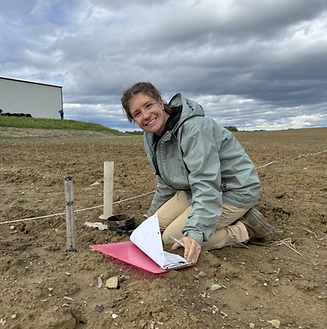
We work side by side with producers on active farms to see how different management choices perform and what results they bring.
By collecting data across diverse regions, growing systems, and management styles, we create an evidence-based big-picture view of agriculture that small scale studies can't capture. We look at many variables within an active farm, from biodiversity to economics. This scale of research creates a large, comprehensive dataset that is essential for guiding both global food policy and practical on-farm decisions.

It's More Than Soil Health
Healthy soil is the foundation of all life, but it doesn’t stop there.
When we study a farm, we’re not just looking at the soil — we’re measuring life in all its forms. From naming the bacteria and fungi living belowground to counting the insects, birds, and plants above it, we’re capturing how the whole system works together.
These biodiversity measurements are key indicators of soil health and the ecosystem’s health as a whole.
We study:
Soil
Microbial activity, organic matter, and carbon storage.
Water
Water infiltration, holding capacity, wet aggregate stability
Leaf tissue analysis/Brix levels, nutrient density/diversity of yield, yield/biomass
Plants
Insects
Ground dwelling and airborne insects and invertebrates (abundance, species richness and diversity, functional groups, pest abundance)
Birds
Bird abundance, species richness, diversity, and habitat use
Pests
Plant pathogens and insect pests
Nutrition
Crop nutrient analyses
Economics
Yields, input costs, and overall profitability
This systems-level approach is what makes our research different. By studying biodiversity, we can see how every form of life is connected, and how these connections shape the health of the entire farm.




"When scientists become farmers it increases the relevance of our questions and credibility of our work. And it goes both ways — farmers need to be our research partners.”
- Dr. Jonathan Lundgren, Ecdysis Foundation
Our Scientific Strategy
.png)

4. Optimize
Use mechanistic and observational studies to further optimize regenerative systems.
A collaborative, farmer-centered approach that connects research with on-farm reality.

1. Identify
Identify key regenerative food systems in different regions that are pioneers in food communities
2. Validate
Validate successful regenerative operations relative to conventional food production strategies using a systems level approach.
3. Develop
Develop a roadmap
to guide farmers transitioning to regenerative production systems, based on farmer-
proven strategies.

Ecdysis is most recognized for the 1000 Farms Initiative.
Since launching, we have measured 1,700+ farms in the United States and beyond, building one of the largest datasets on how management practices affect the land, consumers, and farmers.
Building on the 1000 Farms Initiative, our next phase of research digs deeper. Project Ignite explores specific food systems in greater detail, while Project Avalanche supports farmers in collecting their own data.

